You might not be aware, but repairing corroded alloy wheels involves more than a simple polish and repaint. It needs a careful look at how far the damage goes and the right materials for a lasting result.
If you want to try it yourself, you will need a range of supplies, from good quality sandpaper to metal primer, and you will need to clean and repair the wheels carefully.
The final step, applying a protective coating, is what makes your hard work last. This guide covers the DIY steps, explains what causes corrosion (including winter road salt), and helps you decide when corroded alloys need a professional refurbishment instead.
Key Takeaways
– Assess wheel corrosion carefully, including discolouration and pitting, so the repair and colour matching are right.
– Sand down corroded areas and apply a metal primer followed by wheel paint for a smooth finish.
– Use a protective coating on the wheels to help prevent future corrosion, choosing one that suits the conditions you drive in.
– Regular cleaning, especially rinsing off road salt in winter, is the best way to prevent alloy wheel corrosion.
– Most corroded alloys can be refurbished, but deep corrosion, cracks and diamond cut finishes need a professional.
What Causes Alloy Wheel Corrosion?
Corrosion starts when the protective finish on the wheel is broken and water, salt and dirt reach the metal underneath. The main causes are:
– Road salt: Grit spread on roads in winter is very harsh on wheels. It holds moisture against the surface and leaves white, chalky deposits.
– Brake dust: Every time you brake, tiny metal particles stick to your wheels. Mixed with water, brake dust helps corrosion take hold.
– Rain and damp roads: In the UK, wheels are rarely dry for long. Water and grit sit in small chips and scratches and slowly work under the finish.
– Temperature changes: Wheels heat up when you brake and cool quickly on wet roads. Over time this can weaken the lacquer and let water in.
– Chips and kerb damage: Any scratch or chip gives water and salt a way in, so corrosion often starts at kerb marks.
– Harsh cleaners and poor cleaning: Strong acid-based cleaners can strip protective coatings, and brake dust left on the wheels for weeks speeds up the damage.
This is why even careful drivers who never hit a kerb can still end up with corroded wheels.
Road Salt and Winter Corrosion
Winter is the hardest time of year for alloy wheels. Salt spray sticks to the wheel every time you drive on gritted roads, and the longer it stays there, the more damage it does. Salt mixed with water attacks metal much faster than plain water, and it quickly finds its way into any chips or scratches.
Some of the damage is hidden. Corrosion can start behind the tyre and on the inside of the rim, so by the time you can see it on the front of the wheel it may already be well established. Corrosion on the bead seat, where the tyre seals against the rim, can cause slow air leaks.
Different finishes react in different ways:
– Diamond cut wheels have a machined surface protected by a clear lacquer. Once water and salt get under the lacquer, it can start to lift and the corrosion spreads under the clear coat.
– Powder coated wheels have a tough, baked-on finish, but if it is chipped, corrosion can start underneath and spread.
After winter, check your wheels for:
– White powder or spots that will not wash off.
– Small holes or pitting in the surface.
– Flaking, peeling or bubbling finish.
– Colour changes around the rim edge.
– Tyres that slowly lose air.
Assessing the Damage
Before attempting any repairs, it is important to look carefully at how much corrosion there is on your alloy wheels. This tells you how serious the damage is and what is needed to fix it. Check for discolouration, pitting or rough, uneven surfaces. It is not just about finding where the damage is; it is about understanding how deep it goes and whether it has affected the strength of the wheel.
Once you know how far the corrosion has spread, think about colour matching. The repaired area needs to blend in with the rest of the wheel, which takes care and the right paint to match the original colour.
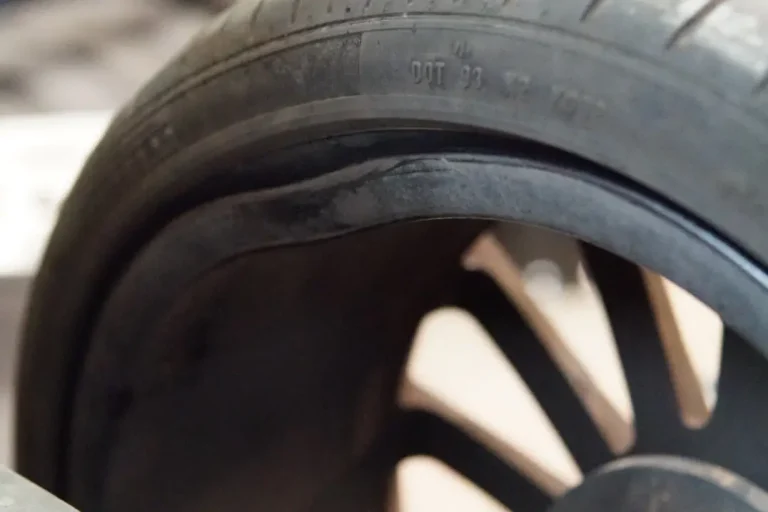
Also check the inside of the rim and the edge where the tyre sits. Corrosion here can stop the tyre sealing properly and cause slow leaks. If the corrosion is deep, covers most of the wheel, or you find any cracks, the wheel needs a professional assessment rather than a DIY repair.
Can Corroded Alloys Be Refurbished?
In most cases, yes. What can be done depends on the type of corrosion:
– Surface corrosion: A dull grey film or light white spots across the wheel. This only affects the outer layer and is the easiest to fix, but it spreads if left.
– Pitting: Small holes or cavities where corrosion has eaten into the metal. This is more serious, but is still repairable in most cases.
– Deep corrosion: Where a lot of metal has been lost. Some wheels can still be saved, but a wheel with deep corrosion across the whole surface may be beyond repair.
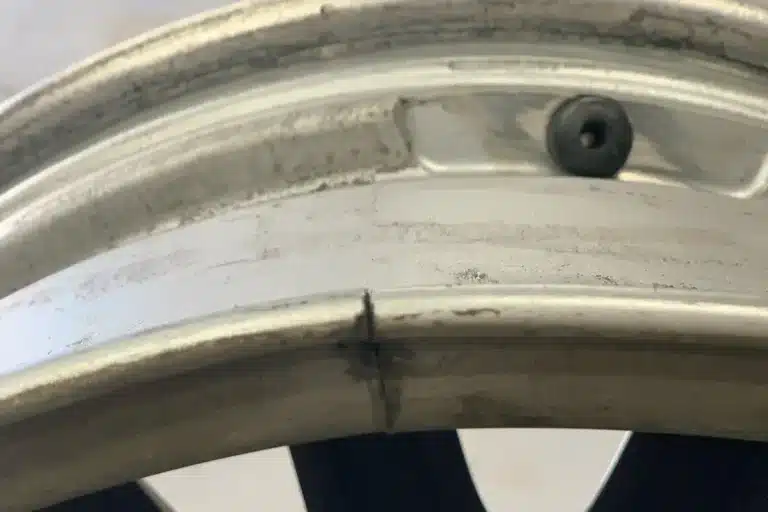
If a wheel also has a crack or a buckle, that needs a structural repair as well. Cracked wheels can be unsafe and should be inspected. Whether a crack can be repaired depends on where it is and how big it is, so our technicians assess every crack first. See our cracked wheel repair and buckled wheel repair pages for more. We will always tell you honestly if a wheel is not safe to restore.
Gathering Necessary Supplies
Once you have assessed the corrosion on your alloy wheels, gather everything you need for the repair. This matters for the finish and for your safety.
Start with good quality sandpaper in different grits: coarse grades to remove the corrosion and finer grades to smooth the surface. A wire brush helps with stubborn spots where corrosion is deeply set.
You will also need a primer made for metal, which acts as a base coat and helps protect against further corrosion. Wheel paint that matches your wheels and a clear coat to seal the finish are also essential. Do not forget safety gear: gloves to protect your hands, a mask so you do not breathe in dust and fumes, and safety glasses to protect your eyes.
Finally, have clean cloths and a good quality cleaner that will not leave residue. These are not part of the repair itself, but they help you prepare your work area and get a clean surface before you start.
Cleaning the Wheels
For a successful repair, you must first clean the alloy wheels thoroughly, removing all dirt, grease, brake dust and loose corrosion. Paint and primer will not stick properly to a dirty surface.
Apply a cleaner made for alloy wheels, which is gentle on the finish but breaks down grime. Use a soft-bristled brush to work it into every part of the wheel, paying special attention to the edges and the inner rim where dirt builds up.
Once you have scrubbed the surface, rinse the wheels well with water to remove all the cleaner. Leftover chemicals can interfere with the repair and may damage the alloy. Dry the wheels with a microfibre towel to prevent water spots, which can hide remaining corrosion or damage.
Next, check the wheel closely for any dirt or grease that is left. If needed, clean it again. A properly clean wheel is the foundation of a good repair.
Repairing the Corrosion
Once the wheels are clean, find the corroded areas and sand them down with a coarse (low grit) sandpaper to remove the surface damage. Work methodically so you do not miss any corroded spots. Then switch to a finer (higher grit) sandpaper to smooth the surface. This gives you a smooth base for primer and paint.
Understanding what causes corrosion helps you avoid it coming back. Here are key points to consider:
– Moisture and salt exposure: These are the main causes of wheel corrosion. Washing off salt quickly, especially in winter or near the coast, greatly reduces the risk.
– Regular cleaning: Dirt and grime trap moisture against the wheel surface. Regular washing stops it building up.
– Repairing small damage quickly: Small scratches or chips expose the metal. Fixing them quickly stops corrosion spreading.
Applying Protective Coating
Before applying a protective coating, make sure the wheel is perfectly clean and completely dry so the coating sticks properly. Choosing the right type of coating matters for how well the wheel is protected. The main types are clear coats, ceramic coatings and powder coating. Each gives a different level of protection, look and life span.
Think about what your wheels will face, such as road salt, water and sunlight. Clear coats are simple and show off the wheel’s natural look, but give less protection in harsh conditions. Ceramic coatings give a tough layer that resists chemicals and heat and makes wheels easier to clean. Powder coating, which is sprayed on and then baked in an oven, gives the strongest barrier against corrosion and is ideal for wheels that face harsh conditions. Powder coating needs specialist equipment, so it is a professional job.
Apply your chosen coating carefully, following the manufacturer’s instructions. This often means several thin layers, with drying time between each one. How long the coating lasts depends on how well it is applied.
When DIY Is Not Enough
DIY repair kits can work for small, shallow marks, but they have clear limits:
– Colour matching is often poor, especially on metallic finishes.
– Touch-up paint cannot recreate a diamond cut finish. That needs a specialist lathe.
– DIY kits cannot fix pitting that goes deep into the metal, cracks or buckles.
– Paint over corrosion that has not been fully removed will usually bubble and flake again.
Choose a professional refurbishment if the corrosion is widespread or deep, if you have diamond cut wheels, if there is any sign of a crack or buckle, or if you want a finish that matches properly and lasts.
How We Refurbish Corroded Alloy Wheels
At Alloy Fix, our alloy wheel refurbishment process for corroded wheels follows these steps:
– Assessment: We inspect every part of the wheel, including the inner rim and bead seat, to see how deep the corrosion goes and check for cracks or buckles.
– Cleaning and stripping: We remove dirt, brake dust and the old finish. Where needed, wheels can be chemically stripped with acid dipping.
– Corrosion removal: We remove the corrosion back to sound metal while protecting the shape of the wheel.
– Structural repairs: Any cracks or buckles are dealt with by our specialists, where the wheel is safe to repair.
– Protective finish: We apply a new finish, such as powder coating or a diamond cut finish, to protect against future corrosion.
We offer a 3 year warranty on all powder coating and diamond cut wheels, and a 1 year warranty on crack repairs. Loan wheels are available, so you can drive away the same day. Find out more about our process or see examples in our gallery.
Keeping Corrosion Away
Once your wheels are repaired, a few simple habits will help keep corrosion away:
– Wash your wheels often in winter and rinse off salt as soon as you can after driving on gritted roads.
– Use a pH-neutral wheel cleaner and a soft brush. Avoid strong acid-based cleaners.
– Do not leave brake dust to build up for weeks.
– Apply a wheel sealant or ceramic coating to help keep out water, salt and brake dust.
– Take care near kerbs, and check your wheels after any pothole or kerb impact.
– Have your wheels checked after winter, even if they look fine, as corrosion can start behind the tyre.
Conclusion
Repairing corroded alloy wheels is a careful process that improves both the look and the condition of your wheels.
By assessing the damage, cleaning thoroughly, removing the corrosion and applying a protective coating, you help your wheels last longer.
Regular care, especially in winter, is the best way to stop corrosion coming back. For deep corrosion, diamond cut wheels or any sign of a crack, a professional refurbishment is the safest choice. Visit one of our workshops in Romford, Dartford or Hemel Hempstead.
Frequently asked questions
Can corroded alloy wheels be refurbished, or should they be replaced?
Most corroded alloys can be refurbished. Surface corrosion and pitting can usually be removed and the wheel refinished. Wheels with deep corrosion across the whole surface, or serious structural damage, may need replacing. A technician should inspect the wheel first and tell you honestly whether it is safe to restore.
How quickly can road salt damage my wheels?
Quite quickly, especially if your wheels already have scratches or chips. Salt mixed with water attacks the metal through any break in the finish and then spreads underneath it. This is why rinsing salt off your wheels regularly in winter is so important.
Can regular washing prevent salt damage?
Regular washing is your best first defence and helps a lot. However, once salt and corrosion have got under the finish through chips or cracks, washing will not remove it. At that point the wheel needs professional refurbishment to remove the corrosion and apply a new protective finish.
Should I repair corroded wheels myself or use a professional?
DIY kits can work for small, shallow marks on painted wheels. Deep pitting, widespread corrosion, diamond cut wheels and any cracks or buckles need a professional, who can strip the wheel, remove all the corrosion and apply a lasting finish such as powder coating or diamond cutting.
Which protective coating gives the best protection against corrosion?
Powder coating gives the strongest barrier against corrosion. Ceramic coatings add a tough layer that resists chemicals and makes wheels easier to clean. Clear coats are the simplest option but give less protection in harsh conditions. Whatever you choose, regular cleaning keeps it working.
How much does it cost to repair corroded alloy wheels?
The price depends on the size of the wheel, how much corrosion and other damage there is, and the finish you choose. You can see our current prices on our price list.