You might not realize it, but the alloy wheels on your car can suffer from damage you cannot easily see, and it can affect how your car drives. When was the last time you checked for cracks or bent rims? A small vibration or a slow drop in tyre pressure might seem harmless, but it could point to a bigger problem. Have you noticed new noises when driving, or has your brake pedal started to pulse? These signs are telling you something about the health of your wheels. This guide works as a simple checklist: the everyday signs, the urgent signs, whether it is safe to keep driving, whether repaired wheels are safe, and how to prevent damage in the first place.
Your Quick Alloy Wheel Checklist
Use this list when you check your wheels. If you tick any of these, read the matching section below.
– Visible cracks, splits, dents or a rim that is no longer round.
– Vibration through the steering wheel or seat, especially at certain speeds.
– A tyre that keeps losing air even though there is no puncture.
– Kerb rash, deep scratches or chips along the rim edge.
– Corrosion: white chalky spots, pitting, or paint bubbling and flaking.
– Peeling, faded or patchy finish.
– Uneven tyre wear or the car pulling to one side.
– Brake pedal pulsing, or clicking, rattling or humming noises.
A quick self-check: in good light, look at the front and the inside of each wheel, run your hand gently around the rim (watch out for sharp edges), look for any bumps, lines or changes in the surface, and check the tyres for uneven wear.
Visible Cracks and Splits
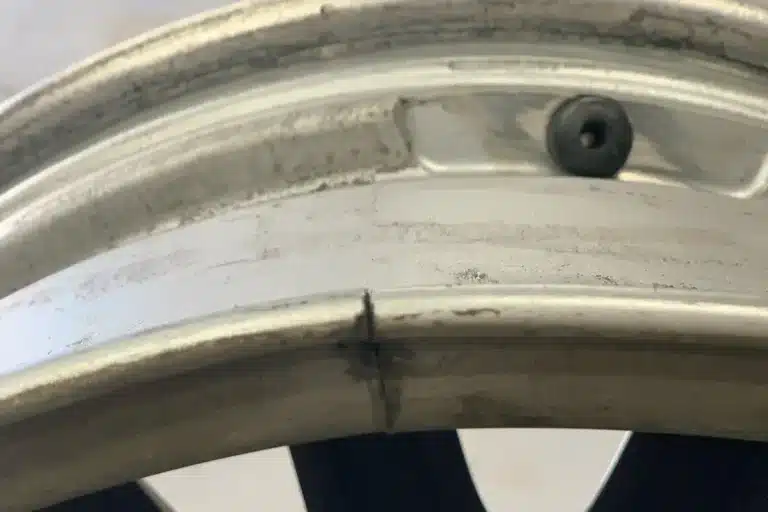
Visible cracks and splits are a clear sign that your wheel needs repair. They weaken the wheel and can make it unsafe.
Look closely at the areas near the spokes and the rim edges, because this is where stress usually shows first. Cracks can be caused by hitting potholes or kerbs, and by long exposure to harsh weather, so finding them early matters.
Check your wheels in good light so nothing is missed. A torch or a magnifying glass can help you spot hairline cracks. If you find a crack, avoid driving on the wheel until an expert has checked it. Even small cracks can grow under pressure. Our cracked wheel repair team will assess the crack first, because whether it can be repaired depends on where it is and how big it is.
Keep your wheels clean, as dirt and brake dust can hide damage. Regular cleaning also helps to stop corrosion, which can make existing cracks worse.
Unusual Vibrations
Unusual vibrations while driving are a common sign that your alloy wheels may need repair. They can be caused by a bent wheel, a wheel that is out of balance, or wheels that are out of alignment.
When your alignment is off, your tyres can wear unevenly and the car may vibrate at certain speeds. It can also affect handling and safety, so it should be sorted quickly.
Rough and uneven roads add wear over time and can knock your wheels out of alignment, which makes the problem worse.
To help find the cause, notice when and where the vibration happens. If it gets stronger at certain speeds or on certain roads, that gives the technician useful clues.
Have your wheels inspected and the alignment checked. Acting early can prevent further damage and keeps your driving smooth and safe.
Bent or Misshapen Rims
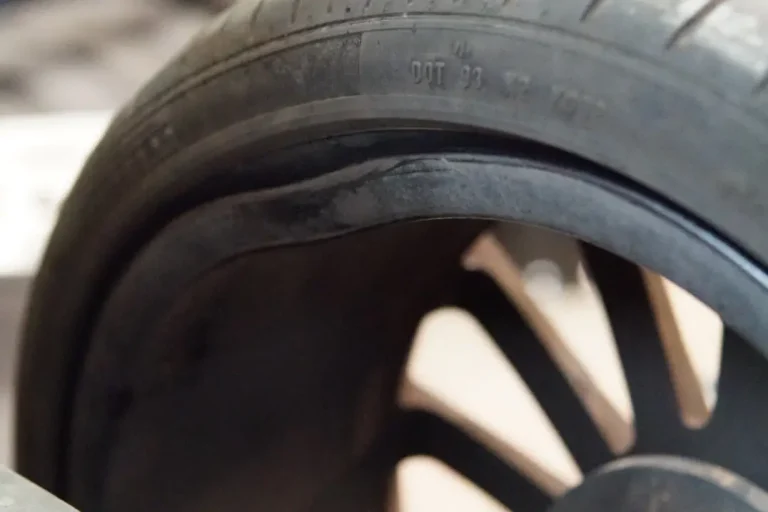
Bent or misshapen rims are a common type of alloy wheel damage, often caused by a hard pothole or kerb impact. A bent rim can affect how your car handles and how long your tyres last.
Start by looking at each rim for anything that is not smooth and round, such as warping, flat spots or dents. Check the inner rim too, as bends there are easy to miss. Even small bends can lead to bigger problems.
Bent rims often cause the car to pull or drift, and you may find you have to keep correcting the steering. A buckled wheel can usually be put right with buckled wheel repair or wheel straightening, once a technician has checked it.
Air Pressure Loss
If a tyre keeps losing pressure and there is no puncture, your alloy wheel may be the cause. Leaks can come from cracks, a bent rim, or corrosion on the bead seat, which is the part of the rim where the tyre seals against the wheel.
Check your tyre pressures regularly so you notice any drop early. If you keep having to top up one tyre, there is a simple test: spray soapy water around the rim and the valve. Bubbles show where air is escaping.
Do not forget the valve. A cracked, loose or worn valve can leak and can look like a wheel problem.
Driving on under-inflated tyres affects braking, handling and tyre wear, so if you find yourself inflating the same tyre again and again, have the tyre and wheel inspected by a professional.
Kerb Rash Damage
Kerb rash can happen when you least expect it and leaves unsightly damage on your alloy wheels. It shows up as scuffs, scratches or gouges on the rim, caused by contact with kerbs or other obstacles.
It is easy to spot: look around the outer edge of each wheel for marks or rough areas. Deep kerb rash should not be ignored, because once the finish is broken the bare metal underneath is open to water and road salt, which can lead to corrosion.
To help prevent kerb rash, leave a safe gap from the kerb when parking and use parking sensors or cameras if your car has them. Rim protectors also give your wheels a buffer against kerbs.
Clean your wheels with a non-abrasive cleaner and a soft cloth so you do not add new scratches.
Kerb damage repair restores the look of the wheel, and the technician will also check that the impact has not caused deeper damage.
Corrosion and Oxidation
Corrosion and oxidation build up slowly on alloy wheels and harm both their look and their strength. They happen when wheels are exposed to water, road salt and dirt. Over time they cause pitting and flaking, which make the wheel look worn and can weaken it.
Signs to look for:
– Pitting: small holes or rough craters in the surface.
– White, chalky spots or a dull grey film that will not wash off.
– Bubbling, swelling or flaking under the paint, which means corrosion is spreading underneath.
– Discolouration or a rough, gritty feel when you run your fingers over the surface.
Even careful drivers get corrosion. Road salt, rain, damp roads and changes in temperature all slowly break down the protective finish, and salt works its way into tiny chips and scratches. Corrosion can also start behind the tyre and inside the rim, where it is hard to see.
Clean your wheels regularly with a non-abrasive, pH-neutral cleaner and a soft brush, and apply a wheel sealant to help keep out water and salt. If you spot early signs, have them dealt with promptly before the damage spreads. Our guide on how to repair corroded alloy wheels explains the options in more detail.
Peeling, Bubbling or Faded Finish
The finish on your wheel is not just for looks. It protects the metal underneath. When it starts to fail, water and dirt can reach the alloy.
– Peeling or flaking: often starts at the rim edge or around chips from kerb damage.
– Bubbling: small blisters in the paint or lacquer, usually a sign of corrosion underneath.
– Fading or patchy colour: often caused by sunlight, road salt or harsh cleaning products.
– Loss of shine or a chalky look that does not improve after cleaning.
A small, isolated chip may only need a local repair. If the lacquer or paint has failed across the wheel, a full alloy wheel refurbishment is usually needed. This strips the old finish, repairs the surface and applies a new protective layer, such as powder coating or a diamond cut finish.
Uneven Tyre Wear
Your tyres can tell you a lot about your wheels. Check the tread across the whole width of each tyre.
– Wear on the inner or outer edge only: often an alignment problem, which a bent wheel can cause.
– Feathered or scalloped tread: can point to poor alignment.
– Patchy dips or cupping: often linked to balance or suspension problems.
Incorrect tyre pressure and worn suspension parts can also cause uneven wear, so it is worth having both the tyres and the wheels checked together.
Wheel Imbalance
Keeping your wheels balanced is just as important as protecting them from corrosion.
Wheel imbalance shows up as vibration through the steering wheel or seat, especially at higher speeds. It happens when the weight is not spread evenly around the wheel, so the wheel wobbles as it turns. It can be caused by uneven tyre wear or hitting a pothole.
Regular wheel alignment checks and tyre rotation help keep tyre wear even. Alignment makes sure your wheels sit at the correct angles, which affects how evenly your tyres wear.
If the vibration does not go away, have your wheels professionally balanced. A technician uses special equipment to spread the weight evenly around the wheel and tyre, so the car drives smoothly again.
Brake Pedal Pulsation
A pulsing brake pedal can be a sign that your alloy wheels or brakes need attention. Finding the exact cause is important. Possible causes include:
– Brake pad wear: pads that wear unevenly can make the braking surface uneven.
– Warped brake discs: heat and sudden temperature changes can warp the discs, so the pedal pulses as they turn.
– Loose wheel nuts: if the nuts are not tightened to the correct torque settings, the wheel may not sit flat against the hub and can vibrate when braking.
– Brake fluid: air or water in the brake fluid can affect how the brakes feel.
Because this can be a brake problem or a wheel problem, have the brakes and wheels checked together so the right fix is made.
Noisy Driving Experience
Unusual noises are another sign your alloy wheels may need attention. Rattling, clicking or humming while driving can come from loose parts, damage or uneven wear.
Notice what kind of noise it is. Clicking, especially when turning or driving slowly, can point to loose or damaged wheel nuts, or a cracked wheel. Rattling can come from loose wheel weights or worn wheel bearings. Humming can point to uneven tyre wear or misalignment.
Do not ignore new noises. Left alone, the cause can lead to faster tyre wear and poorer handling.
Urgent Signs: When to Stop and Get Your Wheels Checked
Some signs mean you should not wait. Get your wheels inspected as soon as possible if you notice:
– A crack of any size, including a fine hairline crack.
– A wheel that looks bent, buckled or no longer round.
– A tyre that loses pressure quickly or keeps going down.
– New or strong vibration, or the car pulling to one side.
– Clicking or knocking from one wheel.
– A hard pothole or kerb impact followed by any change in how the car drives.
If you find a crack, stop as soon as it is safe to do so, take photos of the damage, and do not try to repair it yourself. Cracks can spread and a cracked wheel can let air out of the tyre. Ignoring these signs increases the risk of a tyre blowout or the wheel failing, and the repair usually gets bigger the longer it is left.
Is It Safe to Drive on Damaged Alloy Wheels?
It depends on the type of damage.
When the damage is only cosmetic
Light kerb rash on the outer edge, surface scratches in the paint or lacquer, small scuffs and a dull finish are usually not an immediate safety concern, as long as there is no bending, cracking or vibration. They should still be repaired, because once the protective finish is broken, corrosion can start underneath.
When it becomes a safety issue
Cracks, buckles, repeated air loss, corrosion bubbling under the paint and repeated uneven tyre wear are no longer just about looks. Alloy wheels carry the weight of the car, hold the tyre in place and keep the car balanced at speed, so damage like this can be unsafe and should be inspected. Wheels are also checked during the MOT. Read what happens to your wheels during an MOT check to find out more.
If you are not sure, have it checked. A quick inspection will tell you whether the damage is only cosmetic or something more serious.
Repair or Refurbishment: Which Do You Need?
Alloy wheel repair fixes a specific problem, such as kerb damage, scratches, a dent, a buckle or a crack. Alloy wheel refurbishment restores the whole finish of the wheel and is usually the better choice when damage is widespread, the lacquer has failed or corrosion has spread. Many wheels need both. Our guide to the difference between alloy wheel repair and refurbishment explains this in more detail.
Are Repaired Alloy Wheels Safe?
Yes, when the repair is done properly by a specialist and the damage was repairable in the first place. How safe and long-lasting a repair is depends on how bad the damage was and the method used.
– Cosmetic repairs, such as kerb rash and scratches, do not affect the strength of the wheel.
– Buckled wheels can usually be straightened, but this needs specialist equipment and experience. Home attempts can weaken the wheel.
– Cracks can often be welded, but not every crack can be repaired. The technician assesses each crack first, based on where it is and how big it is, and will tell you if a wheel is not safe to repair.
At Alloy Fix, crack repairs come with a 1 year warranty, and we offer a 3 year warranty on all powder coating and diamond cut wheels. After any repair, the wheel should be balanced, and it is worth checking it from time to time like any other wheel.
DIY repair kits can hide shallow scratches, but they cannot fix cracks or buckles and cannot recreate a diamond cut finish. Structural damage should always be left to a professional. Read more about our repair process.
How to Prevent Alloy Wheel Damage
You cannot avoid every pothole, but these habits make a big difference:
– Watch the road: Look well ahead for potholes and debris, and slow down on rough roads so any impact is softer.
– Mind the kerb: Leave a gap when parking and turning, and take extra care in tight spaces. Diamond cut wheels in particular are easily marked by kerbs.
– Do not overload the car: Extra weight puts more stress on your wheels over bumps and potholes.
– Keep tyres at the right pressure: Check them regularly against your car’s recommended pressures. Correct pressure helps the tyre protect the wheel from impacts.
– Clean gently and often: Use a pH-neutral wheel cleaner and a soft brush. Avoid strong acid-based cleaners and harsh brushes, which can damage the finish.
– Rinse off road salt in winter: Salt left on the wheels speeds up corrosion, so wash it off as soon as you can after driving on gritted roads.
– Add protection: A wheel sealant or ceramic coating helps keep out water, salt and brake dust. Rim protectors help guard the rim edge against kerbs.
– Check after impacts: After hitting a pothole or kerb, look for new marks, bends or air loss.
Conclusion
Keeping an eye on your alloy wheels helps keep you safe and your car driving well. Vibrations, noises, visible cracks, bent rims, air loss, corrosion and kerb rash should never be ignored. Small problems are easier to fix when they are caught early.
If you spot any of the signs in this checklist, bring your car to one of our workshops in Romford, Dartford or Hemel Hempstead. We offer loan wheels, so you can drive away the same day while we work on yours.
Frequently asked questions
How often should I check my alloy wheels?
Give your wheels a quick look whenever you wash the car, and check them closely after any pothole or kerb impact. Look for cracks, dents, kerb rash and corrosion, check your tyre pressures regularly, and pay attention to any new vibration or noise. Catching problems early keeps repairs smaller and your car safer.
Is it safe to drive on a cracked or buckled alloy wheel?
Cracked or buckled wheels can be unsafe and should be inspected as soon as possible. A crack can spread and let air out of the tyre, and a buckle can cause vibration and poor handling. If you find a crack, stop when it is safe, take photos and contact a specialist. Do not try to repair it yourself.
Are repaired alloy wheels safe?
Yes, when the repair is done properly by a specialist and the damage is repairable. Not every crack can be repaired: it depends on where the crack is and how big it is, and the technician assesses it first. At Alloy Fix, crack repairs come with a 1 year warranty, and there is a 3 year warranty on all powder coating and diamond cut wheels.
Can I still drive my car while my wheels are being repaired?
Yes. Alloy Fix offers loan wheels, so you can drive away the same day while your own wheels are being repaired or refurbished.
How much does alloy wheel repair cost?
The price depends on the size of the wheel, the type and amount of damage, and the finish you choose. You can see our current prices on our price list.
Which cleaning products are safe for alloy wheels?
Use a pH-neutral cleaner made for alloy wheels and a soft brush or cloth. Avoid strong acid-based cleaners and abrasive tools, which can damage the finish. Rinse well, dry the wheels, and consider a sealant or ceramic coating to help protect against dirt, brake dust and road salt.